

In moments of deep emotion—whether spiritual, personal, or reflective—tears are a natural and meaningful response. They reflect a connection between what we feel inside and how our body responds. While we often focus on preparing our minds and hearts for such moments, one important aspect is frequently overlooked: the condition of our eyes themselves.
In today’s world, constant screen use, prolonged focus, and digital exposure have quietly changed how our eyes function. Many people experience dryness, irritation, or fatigue without fully realizing it. These changes can interfere with the eyes’ natural ability to respond comfortably and freely.
If we truly want our emotional responses to flow naturally, it becomes important to care not just for our inner state, but also for the physical readiness of our eyes. When both are in balance, the expression becomes effortless, genuine, and complete.
Understanding Tears and Their Balance
Tear production is not a simple process; it depends on a delicate system called the tear film, which has three layers. The outer oil (lipid) layer prevents evaporation, the middle water (aqueous) layer provides moisture and nourishment, and the inner mucin layer helps tears spread evenly across the eye. When these layers are balanced, the eyes remain comfortable and responsive.
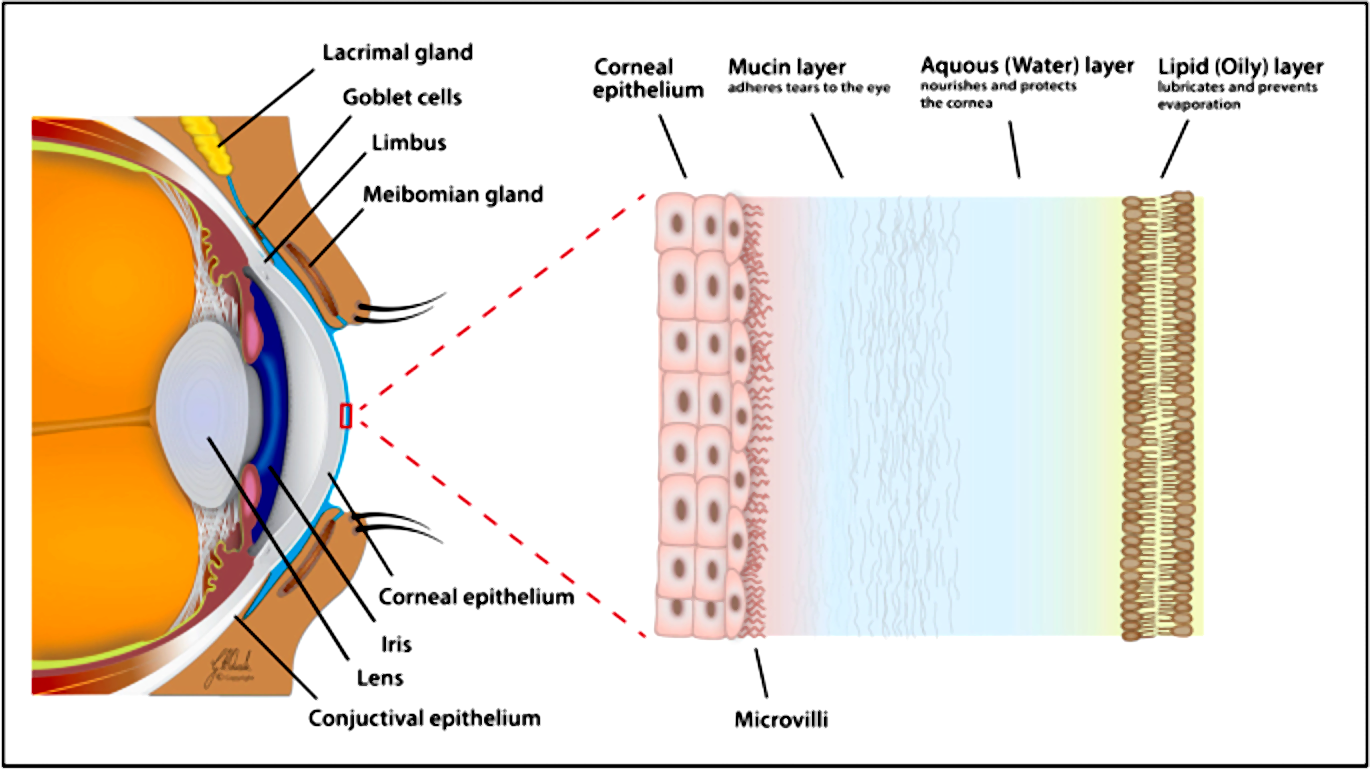
Emotional tears—those shed in remembrance and reflection—are different from ordinary tears. They are triggered through a deeper neurological process involving the heart and mind. When a person reflects sincerely, the limbic system activates, signals pass through the nervous system, and the lacrimal glands produce sustained tears. These tears are more stable, meaningful, and connected to inner spiritual states.
How Modern Habits Disrupt This Balance
With prolonged screen use, several changes occur in the eyes. The blink rate drops significantly, meaning the oil layer is not properly spread. As a result, tears evaporate faster, and the eye surface becomes dry and irritated. The viewing angle of screens also plays a role—when screens are placed at or above eye level, the eyes open wider, increasing exposure and accelerating dryness.
In response to this dryness, the eyes may produce reflex tears, causing watering. While this may seem helpful, these are not true emotional tears. They are produced due to irritation, lack proper balance, and often come with burning or a gritty sensation. In such a state, the eyes are under stress, making it harder to focus in majlis and more difficult for natural, flowing tears to emerge.
Healthy Eyes as Part of Preparation
If we wish for our eyes to respond naturally, they must be in a stable and healthy state. This requires a few practical adjustments. Reducing unnecessary screen time is essential, but equally important is how we use screens. Following the 20-20-20 rule—every 20 minutes, looking 20 feet away for 20 seconds—helps relax the eyes and restore blinking. Keeping the screen slightly below eye level reduces exposure and slows tear evaporation.
In addition, maintaining a normal blinking pattern, using lubricating eye drops when needed, and applying warm compresses to support the oil glands can significantly improve eye comfort. Avoiding direct air from fans or AC and staying hydrated further supports tear stability. These small changes ensure that the eyes are not irritated, but calm and ready.
Special Preparations For Tears In Ashara Mubaraka
Preparing the Inner State
Physical readiness alone is not enough, because the true source of tears lies within the heart. When a person reduces digital distractions and allows time for reflection—thinking about one’s shortcomings, revisiting the أحداث of Karbala, and engaging deeply with remembrance—the heart gradually softens. This softness activates the emotional pathways that lead to sincere tears. When the inner state aligns with physical readiness, the response becomes natural and complete.
A Thoughtful Approach for All Ages
This preparation applies to every age group. Children should be protected from excessive screen exposure, including television, so their natural emotional softness is preserved. Youth, who are most affected by constant digital engagement, must consciously discipline their screen habits to maintain both emotional depth and eye health. Adults should create moments of disconnection from daily pressures and screens, allowing space for reflection. Elders, while spiritually inclined, should focus on maintaining eye comfort and hydration so that physical dryness does not become a barrier.
Final Reflection
Tears in the remembrance of Imam Husain (AS) are not accidental—they are the result of preparation. They require a softened heart, a focused mind, and healthy, balanced eyes. Irritated or watery eyes caused by screen strain do not assist this process; rather, they interfere with it.
When we reduce distractions, correct our habits, and take care of both our inner state and physical condition, we create the environment in which tears can flow sincerely and naturally. May Allah grant us the tawfeeq to prepare ourselves completely and bless us with true, flowing tears in the remembrance of Imam Husain (AS).