
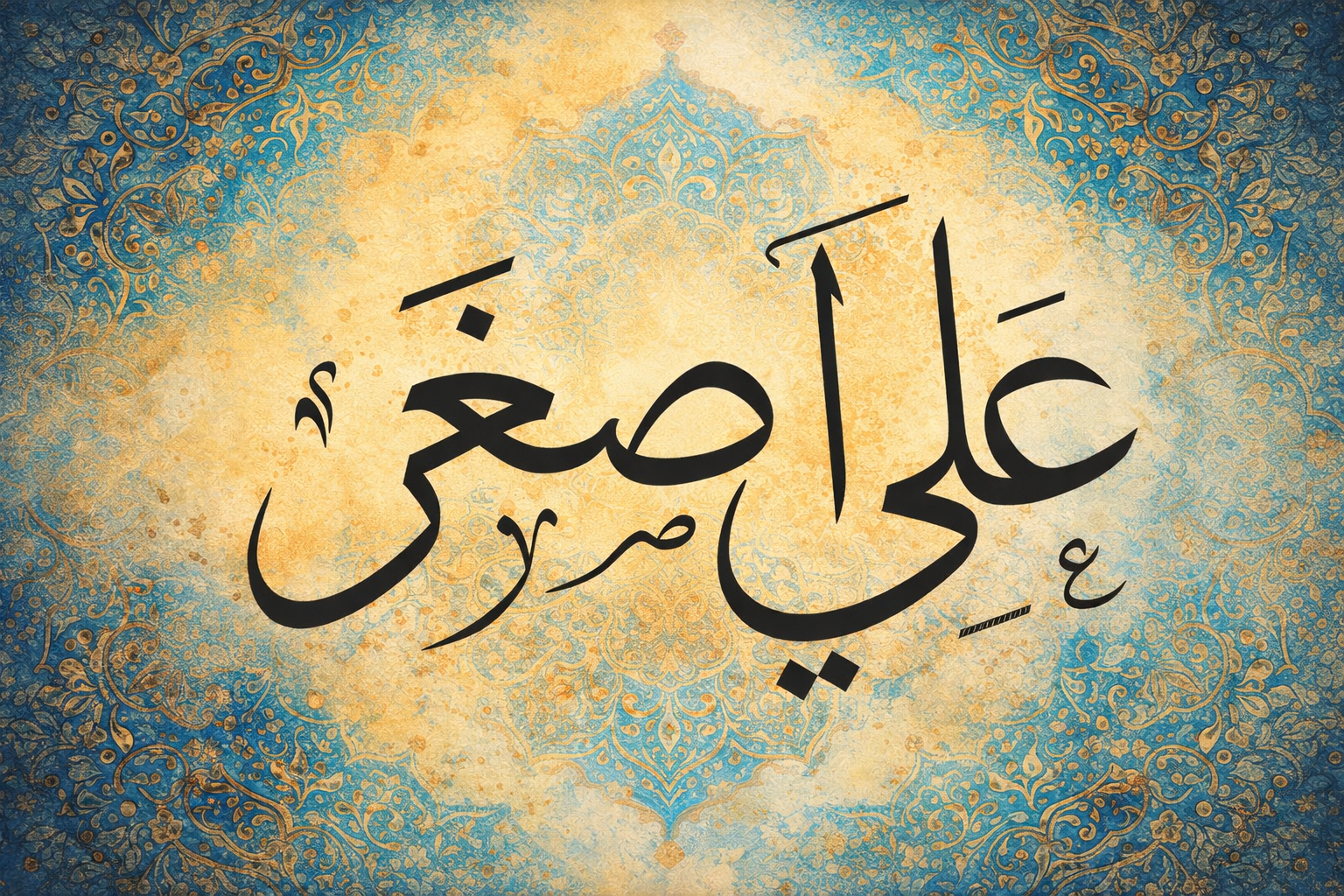
Aliasgar (علي أصغر)
Aliasgar is an Arabic–Persian compound name formed from “Ali” (علي) and “Asghar” (أصغر). Ali means high, elevated, noble, or exalted, and is famously associated with Imam Ali (ع), symbolizing courage, justice, wisdom, and moral strength. Asghar means younger, smaller, or the youngest, but in classical Arabic usage it does not imply weakness; rather, it often conveys tenderness, purity, and innocence.tual connection with the legacy of Karbala and the Ahl al-Bayt.
In Arab tradition, particularly within the family of Imam Ali (ع), it was common to name children in remembrance of revered elders. Imam Husain (ع) named more than one of his sons Ali to honor his father, Imam Ali ibn Abi Talib (ع). To distinguish between the elder and younger sons, descriptive titles were added: Ali Akbar (ع) for the elder son and Ali Asghar (ع) for the youngest.
The name Aliasgar combines “Ali” (علي) meaning exalted, noble, elevated, and “Asghar” (أصغر) meaning the youngest. In this context, Asghar does not denote insignificance, but rather identifies age while preserving the nobility of the name Ali.
Ali Asghar (ع) is the youngest son of Imam Husain (ع) and Hazrat Rubab (ع). He was six months old at the time of Karbala. His martyrdom is among the most heart-rending moments in Islamic history. Imam Husain (ع) carried Ali Asghar (ع) in his arms to the enemy camp, seeking water for the infant, when an arrow struck the child, leading to his martyrdom in the arms of his father.
Thus, the name Aliasgar symbolizes innocence, sacrifice, truth, and the ultimate testimony against oppression, showing that even the youngest can become a timeless witness to justice.